


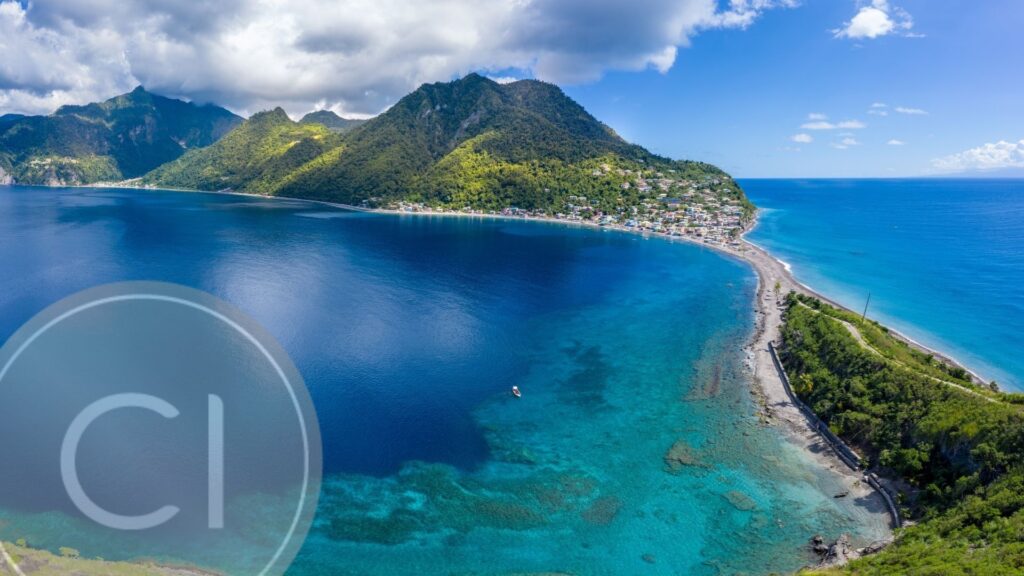
Dominica Citizenship by Investment remains one of the most established second citizenship routes in the Caribbean, especially for investors and families seeking a regulated, cost-conscious, and family-friendly program.
Launched in 1993, the program allows eligible applicants to obtain Dominican citizenship through a qualifying contribution to the country or an investment in government-approved real estate. The program is managed by the Dominica Citizenship by Investment Unit, and applications must be submitted through an authorised agent, not directly by the applicant.
That structure matters. Dominica Citizenship by Investment is not a simple passport purchase. It is a government process involving source-of-funds review, due diligence, document accuracy, mandatory interviews for applicants aged 16 and above, and final approval by the authorities.
For applicants comparing Caribbean options, Dominica is often considered for three reasons: accessible entry cost, established program history, and a direct citizenship route without long relocation requirements.
If you are still comparing available routes, you can also review IMMIGRATION CORP.’s guide to citizenship by investment programs and the main page for Dominica Citizenship by Investment.
| Key point | Dominica Citizenship by Investment |
|---|---|
| Program launch | 1993 |
| Minimum contribution | US$200,000 through the Economic Diversification Fund |
| Real estate route | From US$200,000 in an approved project |
| Real estate holding period | 3 years, or 5 years if reselling to another CBI applicant |
| Submission route | Through an authorised agent |
| Interview | Mandatory for applicants aged 16 and above |
| Main applicant age | 18 and above |
| Processing expectation | Often around 3 to 6 months, subject to file and authority review |
| Citizenship status | Citizenship for life, subject to law |
| Passport application | After Certificate of Naturalisation |
The biggest advantage of Dominica Citizenship by Investment is not only cost. It is the combination of affordability, program maturity, and a relatively clear investment structure.
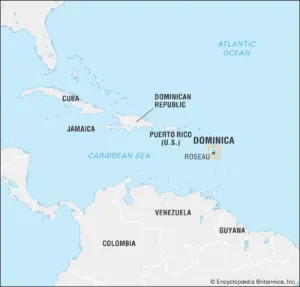
Dominica is known as the Nature Island of the Caribbean, but investors should look beyond the destination image.
The country’s value in investment migration comes from a more practical combination: political stability, Commonwealth ties, an English-speaking legal and administrative environment, and a long-running citizenship program that has operated for more than three decades.
Dominica Citizenship by Investment also sits within a wider regional context. Caribbean CBI programs have faced increasing international scrutiny, stronger due diligence expectations, and more pressure to maintain program integrity. For serious applicants, this is not necessarily negative. Stronger controls can support the long-term credibility of the passport.
That is why the right question is not simply whether Dominica is affordable.
The better question is whether the program fits the applicant’s family, source of funds, timeline, investment preference, and long-term planning goals.
Dominica Citizenship by Investment has two main investment routes.
Applicants can either make a non-refundable contribution to the Economic Diversification Fund or invest in government-approved real estate.
The official Dominica CBIU investment options page explains that applicants may choose between the Economic Diversification Fund and real estate investment in an approved project.
| Route | Best suited for |
|---|---|
| Economic Diversification Fund | Applicants who want the cleanest and most direct route |
| Approved real estate | Applicants who prefer an asset-backed route and understand holding-period risk |
Both routes can lead to citizenship if the applicant is approved and all program conditions are met. The better route depends on financial strategy, family size, liquidity preference, and appetite for real estate exposure.
The Economic Diversification Fund is usually the simplest route.
It is a non-refundable contribution to Dominica’s national development priorities. The fund supports areas such as education, healthcare, tourism, infrastructure, and wider public-sector development.
For 2026, the current official minimum EDF contribution starts at US$200,000 for a main applicant.
The Dominica 2026 application process guide lists the EDF contribution structure as:
| Applicant structure | EDF contribution |
|---|---|
| Main applicant | US$200,000 |
| Main applicant and up to three dependants | US$250,000 |
| Each additional dependant under 18 | US$25,000 |
| Each additional dependant aged 18 or above | US$40,000 |
This route is often preferred by applicants who value certainty of cost and simplicity over recoverability of capital.
The main limitation is clear: the contribution is not recoverable. The benefit is citizenship, not an investment asset.
For many families, this is still the most practical option because it avoids resale risk, developer risk, and long-term property management.

The real estate option allows applicants to invest in a government-approved project.
The minimum real estate investment is US$200,000. According to the official Dominica CBIU guidance, the property must be held for at least three years from the date citizenship is granted, or five years if the future purchaser is also a Citizenship by Investment applicant.
This distinction is important.
A real estate route may look more attractive because capital is tied to an asset. But investors should not assume full capital recovery. Approved CBI real estate can carry premiums, resale restrictions, management fees, transaction costs, and limited secondary-market depth.
Before choosing real estate, applicants should ask:
| Question | Why it matters |
|---|---|
| Is the project government-approved? | Only approved projects qualify |
| What is the total price after fees? | Headline investment is not total cost |
| What is the holding period? | Determines when exit is possible |
| Who can buy the unit later? | Affects resale market |
| Are rental returns projected or guaranteed? | Changes the risk profile |
| What are management fees? | Affects net return |
| Is there a clear exit plan? | Prevents unrealistic expectations |
Dominica Citizenship by Investment through real estate can be suitable for applicants who understand the asset, the holding period, and the exit limitations. It should not be chosen only because “property feels safer.”
Costs vary depending on the selected route and family composition.
For the EDF route, the main financial commitment is the contribution itself, plus supporting costs such as processing, due diligence, interview, certificate, professional, and document-related fees.
For the real estate route, investors must also account for government fees after approval. The official 2026 application process guide lists real estate government fees starting at US$75,000 for the main applicant and US$100,000 for the main applicant with up to three dependants.
Additional fees may include:
| Fee type | Why it matters |
|---|---|
| Processing fee | Charged per application |
| Due diligence fee | Applies to background checks |
| Mandatory interview fee | Applies to applicants aged 16 and above |
| Certificate fee | Applies at naturalisation stage |
| Professional fees | Paid to advisory or legal teams |
| Translation and legalisation | Depends on document origin |
| Courier and banking costs | Often overlooked in planning |
| Real estate transaction costs | Relevant for property route |
Applicants should ask for a full written cost breakdown before starting.
A strong advisor should separate government fees, professional fees, investment amounts, project costs, and supporting expenses clearly.

Dominica Citizenship by Investment follows a structured process.
The official CBIU process identifies five broad stages: choosing an authorised agent, preparing the application, application processing, background checks, and payment followed by issuance of the Certificate of Naturalisation.
In practical terms, the applicant journey usually looks like this:
| Stage | What happens |
|---|---|
| Pre-assessment | Profile, family, funds, and suitability are reviewed |
| Route selection | EDF or real estate is selected |
| Document planning | Civil, financial, medical, and compliance documents are prepared |
| Submission | Authorised agent submits the file to the CBIU |
| Due diligence | Background checks and mandatory interviews are completed |
| Approval in principle | Applicant is invited to complete the investment |
| Investment payment | EDF contribution or real estate payment is completed |
| Naturalisation | Certificate of Naturalisation is issued |
| Passport application | Applicant applies for the Dominican passport |
The most important point is that the main investment is generally completed after approval in principle, not before the full government review.
That sequencing helps reduce applicant risk, but it does not remove the need for strong preparation.
Dominica Citizenship by Investment is known for strict due diligence.
This is a core part of the program’s credibility. Applicants should expect a detailed review of identity, criminal history, source of funds, source of wealth, sanctions exposure, adverse media, business background, and family documentation.
The official CBIU website states that all applicants aged 16 and older must attend a mandatory interview as part of the background check stage.
This is one area where weak preparation can damage an otherwise strong application.
A founder with a business sale, a real estate investor with multiple property disposals, a crypto investor, or a family with assets across jurisdictions may need a more detailed source-of-funds presentation.
The application should tell a coherent financial story:
| Source of funds issue | What should be prepared |
|---|---|
| Business sale | Sale agreement, tax documents, bank records |
| Salary and savings | Employment letters, payslips, bank statements |
| Property sale | Title documents, sale contract, payment trail |
| Dividends | Company records and distributions |
| Inheritance | Probate, estate records, transfer evidence |
| Crypto wealth | Exchange records, transaction history, fiat conversion proof |
Due diligence should not be treated as paperwork. It is the foundation of the case.
Dominica Citizenship by Investment can be attractive for family planning because eligible dependants may be included in the application.
Family eligibility should always be checked before a program is selected, especially for applicants with adult children, dependent parents, or complex family structures.
Commonly eligible dependants may include:
| Family member | Planning note |
|---|---|
| Spouse | Usually included with supporting civil documents |
| Children under 18 | Usually straightforward if documentation is complete |
| Adult dependent children | Dependency, age, education, and support rules matter |
| Children with disabilities | May qualify subject to evidence |
| Parents and grandparents | Age and financial dependency rules apply |
| Future children | Registration rules should be reviewed |
The mistake many families make is assuming all Caribbean programs treat dependants the same way.
They do not.
A program that works well for a single applicant may not be the strongest choice for a family with adult children or older parents. For a family application, total cost and eligibility rules matter more than the single-applicant minimum.
Dominica offers a favorable tax environment, especially for non-residents.
However, applicants should separate citizenship from tax residence.
Obtaining Dominica Citizenship by Investment does not automatically mean the applicant becomes tax resident in Dominica. Tax residence generally depends on physical presence, residence facts, and the applicable tax rules.
Dominica is often attractive because non-resident citizens are generally not taxed on foreign income. The country also does not impose wealth tax, inheritance tax, or capital gains tax in the way many high-tax jurisdictions do.
Still, citizenship should never be marketed as a complete tax solution.
For U.S. citizens, for example, worldwide tax and reporting obligations may continue regardless of a second citizenship. For residents of other countries, tax outcomes may depend on domicile, days spent, family location, business management, and treaty rules.
Investors should treat tax as a separate professional planning layer.
For more context, review IMMIGRATION CORP.’s guide to tax residency, investment holding periods, and payment stages.

The real estate route deserves careful analysis.
It may appeal to investors who want an asset-backed path, but the financial logic should be tested.
A property can qualify for Dominica Citizenship by Investment while still having risks around pricing, liquidity, management, occupancy, resale demand, and holding-period compliance.
Before choosing an approved project, ask:
| Question | Why it matters |
|---|---|
| Is the project listed by the government? | Confirms eligibility |
| What is the developer’s track record? | Reduces project risk |
| What are the annual costs? | Affects net return |
| Is there rental history? | Tests income assumptions |
| Can the unit be resold to another CBI applicant? | Determines five-year relevance |
| What happens if resale is delayed? | Affects liquidity planning |
| Are returns guaranteed or projected? | Changes risk interpretation |
Real estate should be chosen because it fits the investor’s strategy, not because it sounds more sophisticated than a contribution.
Dominica Citizenship by Investment may suit applicants who want a direct, established, and relatively cost-conscious route to second citizenship.
It is often relevant for:
| Applicant type | Why Dominica may fit |
|---|---|
| Single applicants | Competitive EDF contribution |
| Families | Structured dependant inclusion |
| Entrepreneurs | Mobility and long-term optionality |
| Investors | Choice between contribution and real estate |
| Globally mobile families | No long relocation requirement |
| Legacy planners | Citizenship may support future generations |
| Cost-conscious applicants | Lower entry point than several alternatives |
It may be less suitable for applicants who need a direct route to European residence, a highly liquid investment, or a program with no interview requirement.
The right fit depends on the applicant’s objective.
Applicants often misunderstand Dominica Citizenship by Investment in several ways.
| Mistake | Why it matters |
|---|---|
| Looking only at the minimum amount | Total cost depends on family and route |
| Assuming real estate is fully recoverable | Exit value may differ from purchase price |
| Ignoring interview requirements | Applicants aged 16 and above must prepare |
| Treating crypto as direct payment | Crypto must usually be converted and documented |
| Underestimating source-of-funds review | Weak evidence can delay or damage the case |
| Comparing programs only by passport strength | Durability and due diligence also matter |
| Choosing route before family review | Dependants can change the best option |
| Assuming tax benefits apply automatically | Tax residence must be assessed separately |
A strong application begins with clarity, not urgency.
The best first step is not choosing EDF or real estate.
It is a structured eligibility and strategy review.
That review should assess nationality, country of residence, family composition, source of funds, source of wealth, business background, previous visa history, tax sensitivity, preferred investment route, and timing.
Only then does the recommendation become meaningful.
IMMIGRATION CORP. is officially authorized by the Dominica Government to process citizenship and passport applications. For investors and families, this matters because Dominica Citizenship by Investment applications must be submitted through authorised channels.
IMMIGRATION CORP. supports applicants with program selection, document preparation, source-of-funds organization, application submission, government coordination, and post-approval steps.
You can also explore the latest citizenship and residency news or compare Dominica with other Caribbean citizenship by investment programs.
Book a complimentary consultation to assess whether Dominica Citizenship by Investment fits your family profile, investment preferences, and long-term planning goals.
Dominica Citizenship by Investment is a government program that allows eligible applicants to obtain Dominican citizenship through a qualifying investment, either by contributing to the Economic Diversification Fund or investing in approved real estate.
The minimum investment starts from US$200,000. The final cost depends on the selected route, family size, due diligence fees, processing fees, interview fees, certificate fees, professional fees, and document-related expenses.
There are two main options: a non-refundable contribution to the Economic Diversification Fund or a minimum US$200,000 investment in government-approved real estate.
No. The Economic Diversification Fund contribution is non-refundable. It is usually the simplest route, but it does not create an asset that can be sold later.
Approved real estate must generally be held for at least three years from the date citizenship is granted. If the property is sold to another Citizenship by Investment applicant, a five-year holding period applies.
Yes. Dominica requires a mandatory interview for applicants aged 16 and above as part of the due diligence and background check process.
Yes, eligible family members may be included, including a spouse, children, qualifying adult dependent children, and qualifying parents or grandparents, subject to program rules and documentation.
Dominica generally offers a favorable tax environment for non-residents, but tax treatment depends on personal facts and tax residence. Applicants should seek professional tax advice before making assumptions.
Cryptocurrency is not generally used as a direct payment method. It may be considered as part of source of wealth if converted to fiat through regulated channels and supported by full transaction history and compliance documentation.
The process is often presented as taking around 3 to 6 months from submission to approval, but timing depends on document quality, due diligence, interview scheduling, government review, and applicant complexity.
Dominica may be highly suitable for cost-conscious applicants and families seeking an established direct citizenship route. However, the best program depends on family eligibility, source of funds, timeline, investment route, and long-term objectives.
Start with a professional eligibility review. IMMIGRATION CORP. can assess your profile, explain available routes, clarify costs, and guide you through the Dominica Citizenship by Investment process.


